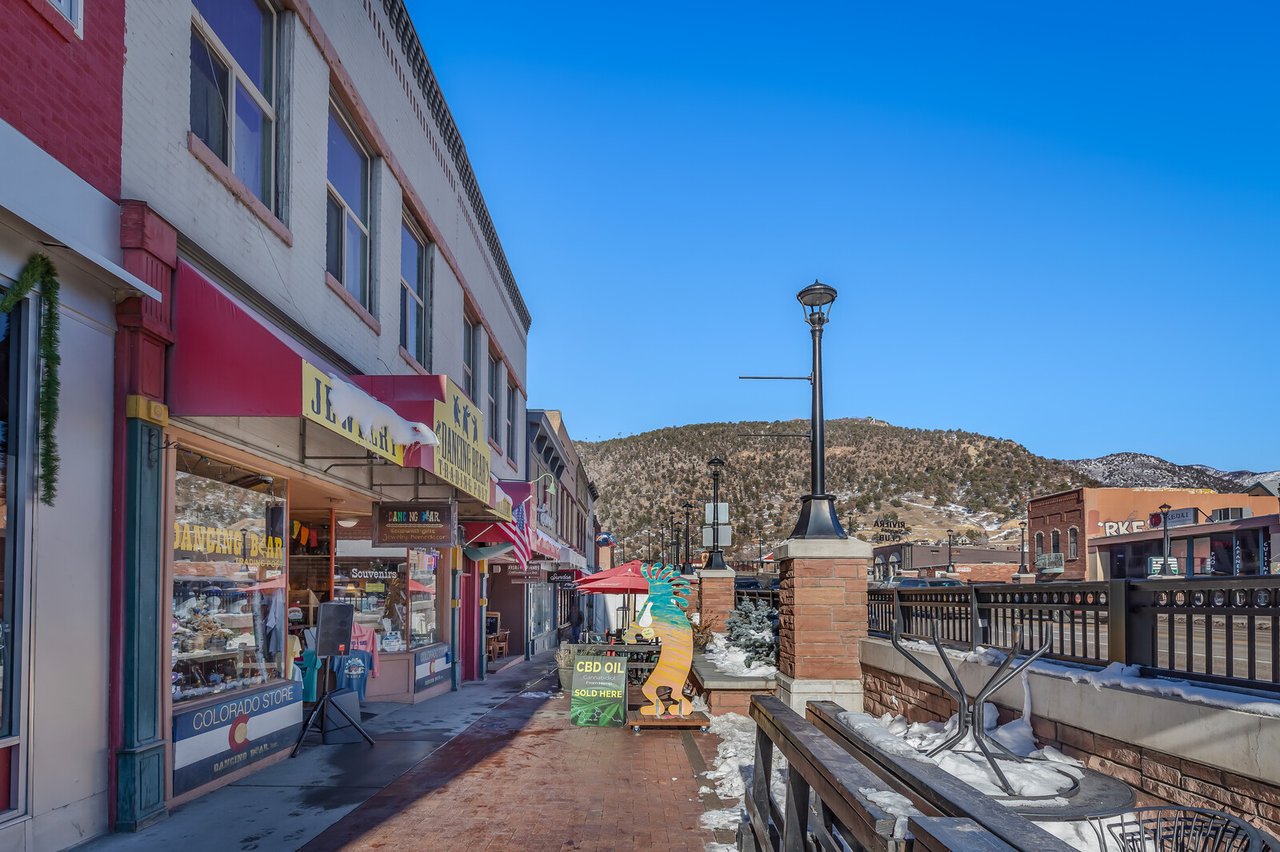
If you are trying to decide whether to lease or buy commercial space in Glenwood Springs, you are not alone. It is a big choice, and in a market shaped by tourism, local traffic patterns, zoning rules, and long-term growth pressure, the right answer depends on more than just monthly cost. This guide will help you weigh flexibility, control, financing, and local due diligence so you can make a smarter decision for your business. Let’s dive in.
Why Glenwood Springs changes the equation
Glenwood Springs is not just another small mountain market. The city sits at the intersection of I-70 and SH 82, and it serves as a regional hub for Garfield County with a downtown commercial district that supports retail, entertainment, higher education, and professional offices.
That local role matters when you are choosing space. The city reports about 2.1 million visitors a year, along with a 2022 population of 10,253 and a daytime population of 14,682. For many businesses, that means your success may depend as much on visitor flow, commuter traffic, and daytime activity as it does on year-round residents.
The city’s planning documents also point to increasing development pressure, traffic congestion, and changing character. In practical terms, that means location quality, access, parking, and long-term use fit can carry as much weight as price.
When leasing makes more sense
Leasing is often the better fit when you want flexibility and a lower upfront commitment. If you are opening a new concept, testing a submarket, or trying to preserve cash for operations, a lease may give you room to move without tying up as much capital.
That can be especially helpful in Glenwood Springs, where the right block, access pattern, or parking setup can make a real difference. If you are still learning how your business performs with local and visitor traffic, leasing may help you reduce the risk of locking into the wrong property for the long haul.
The tradeoff is that flexibility is not always cheap. SBA guidance notes that leasing can sometimes cost less than financing a purchase when interest rates are high, but over time leasing usually costs more than owning.
Shorter leases can also come with higher monthly payments. And if your business needs change quickly, early termination penalties can be expensive.
Leasing works well if you need to:
- Open quickly
- Keep more cash available for operations
- Test a location before making a long-term commitment
- Adjust your size, concept, or neighborhood over time
- Avoid taking on full maintenance and ownership responsibilities
What to check before signing a lease
In Glenwood Springs, a lease decision should never be based on rent alone. The city advises business owners to speak with Community Development staff before signing so they understand zoning, parking requirements, and possible fees.
That step matters because a space that looks right on paper may not support your intended use. The city’s business guide also notes that system improvement fees may apply when a change in use increases demand on infrastructure such as water, sewer, fire, schools, or parkland.
If you are looking downtown, there is another layer to consider. Glenwood Springs has downtown design standards and historic preservation considerations aimed at protecting the area’s character and pedestrian-friendly environment.
That does not mean downtown space is harder to lease. It does mean you should confirm buildout limits, use compatibility, and approval requirements before you commit.
Before you sign a lease, verify:
- The zoning district and whether your use is allowed
- Parking requirements for your business type
- Whether system improvement fees may apply
- Any downtown design standards that affect signage or improvements
- Any historic preservation rules tied to the property
- How much flexibility the lease gives you if your business changes
When buying may be the better long-term move
Buying can be the stronger play when you expect to stay in one place for years and want more control over the property. If your business is established, your location needs are stable, and you can handle the upfront investment, ownership may create more long-term value.
This is often true for owner-operators who want to improve the space around a proven concept. It can also appeal to investors or business owners who want to control future occupancy costs rather than remain exposed to lease renewals.
SBA guidance generally supports buying when you have enough cash or credit and expect to use the asset for a long time. In that situation, ownership can align better with a long-term operating plan.
Of course, buying comes with more responsibility. Owners usually take on more maintenance, more compliance risk, and property tax exposure that tenants may not fully see upfront.
Buying may be a better fit if you want to:
- Stay in the same location for the long term
- Control improvements and buildout decisions
- Build value in the real estate over time
- Explore owner-occupied financing options
- Take advantage of eligible local improvement or rehabilitation programs
Financing and local incentives to know
For owner-occupied commercial real estate, SBA highlights two common financing paths: 504 loans and 7(a) loans. The 504 program can be used to purchase existing buildings or land and to improve land, utilities, parking lots, streets, and landscaping, while 7(a) loans can be used to acquire, refinance, or improve real estate and buildings.
Glenwood Springs also offers local tools that may help some buyers and owner-occupants. The city’s Revolving Loan Fund provides low-interest financing for eligible businesses within city limits for items such as property rehabilitation, site improvements, fire suppression systems, fixtures, furniture, equipment, and limited new construction.
The city also lists a sales tax rebate program for eligible businesses. Within downtown boundaries, DDA programs may include design assistance, facade improvements, alley lighting, and safety or security support.
If you are considering an older downtown building, ownership may bring another possible advantage. The city notes that designated historic commercial buildings may qualify for state or federal grants and tax credits tied to restoration or rehabilitation.
Property taxes and ownership costs
If you are thinking about buying, property taxes should be part of your math from the start. Colorado’s Division of Property Taxation says 2026 assessment rates are 25% for commercial improved property and 26% for commercial other property.
Your actual tax bill will depend on more than the city alone. In Garfield County, tax rates can include county, city, school, water, college, library, RFTA, and other levies depending on the parcel’s tax area.
That means there is no single Glenwood Springs commercial tax number that fits every property. To get the real picture, you need parcel-specific tax area and mill levy details.
Zoning should come first
Before you lease or buy, start with zoning. Glenwood Springs has 17 zone districts, including mixed-use, commercial, resort, light industrial, river industrial, and planned unit development districts.
The city describes zoning as the primary tool used to implement its Comprehensive Plan. For you, that means zoning is not just a box to check. It is the first filter for whether a property can support your business now and over time.
Parking also ties directly into this decision. The city’s business guidance specifically calls out allowed use and parking requirements as items to confirm early.
A space can be attractive, visible, and well-priced, but if the use is not permitted or parking falls short, it may not be the right fit. That is true whether you are leasing or buying.
A simple way to decide
If your top priority is flexibility, lower upfront cash, and the ability to test your concept, leasing often makes more sense. If your business is stable, your location needs are clear, and you are ready to take on taxes, upkeep, and compliance, buying may be the stronger long-term play.
In Glenwood Springs, this decision is especially local. Visitor volume, daytime population, downtown standards, zoning, parking, and property-specific taxes all shape whether a site truly works.
That is why the best decision is rarely just lease versus own. It is about choosing the option that matches your timeline, capital, operations, and the realities of the property itself.
Working through those details with a team that understands local commercial inventory, tenant economics, and property-level diligence can save you time and help you avoid expensive missteps. If you are weighing your next move in Glenwood Springs, C&E Group can help you evaluate leasing and purchase options with a practical, local lens.
FAQs
Should a business owner lease or buy space in Glenwood Springs?
- It depends on your timeline, capital, and need for flexibility. Leasing often fits businesses that want lower upfront costs or need to test a location, while buying may suit businesses with stable long-term space needs and enough capital to handle ownership costs.
What should you verify before leasing commercial space in Glenwood Springs?
- You should confirm zoning, allowed use, parking requirements, possible system improvement fees, and any downtown design or historic preservation requirements before signing a lease.
Can you finance owner-occupied commercial property in Glenwood Springs?
- Yes. SBA 504 and 7(a) loan programs can be used for eligible owner-occupied commercial real estate and building purchases or improvements.
Are there local incentives for buying or improving commercial property in Glenwood Springs?
- Glenwood Springs lists a Revolving Loan Fund, a sales tax rebate program for eligible businesses, and certain downtown DDA programs. Designated historic commercial buildings may also qualify for restoration or rehabilitation incentives.
How do commercial property taxes work in Glenwood Springs?
- Commercial property taxes are parcel-specific. Assessment rates are set by the state, but the full tax bill depends on the parcel’s tax area and the combined levies that may include county, city, school, water, college, library, RFTA, and other districts.