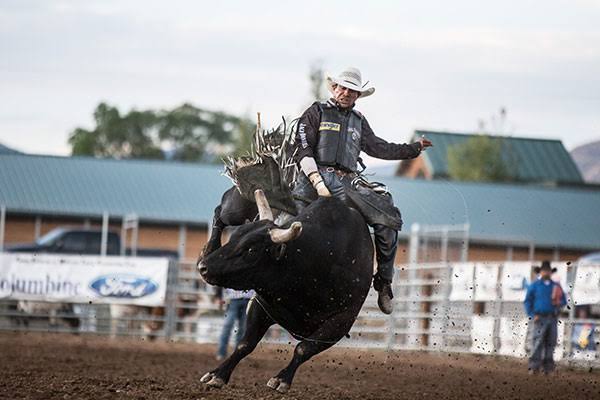
Monday morning, the Garfield County Fairgrounds on Railroad Avenue sit empty. The grandstand bleachers are bare, the midway lights are down, and the smell of fry oil that hung over 26th Street for a week has finally cleared. If you drove past the fairgrounds expecting Rifle to feel quiet after the 88th annual fair wrapped its run on August 1 and again August 4 through 8, you noticed something else instead: the orange cones on Whiteriver Avenue are still there. So is the flagger at 16th Street. So is the detour sign pointing traffic around Park Avenue.
That's the thing about fair week. It gives everyone in town a built-in excuse for a slow drive across Rifle. Once the rodeo trucks pull out, the excuse goes with them, but the construction doesn't. What's left is the clearest view residents will get all summer of what's actually been happening under the crowd noise.
What the Fair Was Standing On Top Of
Three separate infrastructure projects have been running through Rifle at the same time the fair was setting up, running, and tearing down. None of them paused for the parade down Railroad Avenue. Here's what's still active as locals get their weekday routines back:
- Whiteriver Avenue Improvement Project, Ninth Street to 16th Street. Funded in part by a $400,000 grant from the Garfield County Federal Mineral Lease District, the work covers repaving, sidewalk reconstruction with pedestrian crossing upgrades, water main replacement, and bank stabilization. About 1,300 residents live along this corridor.
- Graham Mesa Avenue Reconstruction, East 16th to East 19th Street, focused on road rebuilding and sidewalk work, still underway as of late June according to the city's own construction updates.
- Park Avenue Bridge, the newest piece, built to extend Park Avenue through to U.S. Highways 6 and 24. As of late June, crews were still finishing asphalt work and utility connections on West Third, West Second, and Park Avenue itself, with drivers heading toward the Prefontaine Mesa neighborhood routed around it via the Highway 13 Bypass or West 16th Street.
City Engineer Craig Spaulding put the Whiteriver project in plain terms when the funding came through:
"This project will increase the reliability of the waterline and roadway along this portion of Whiteriver Avenue."
That's not a small claim in a town where the existing waterline dates back decades. It's also not a project that finishes in a week. Anyone budgeting their commute around the fairgrounds traffic for the last ten days should expect the same detours through the rest of the construction season, fair or no fair.
The Bridge Is Supposed to Fix the Snarl It's Currently Causing
The irony of the Park Avenue Bridge is that it's the project most likely to make Rifle's traffic pattern better once it's done, and the one causing the most disruption while it isn't. The bridge and the Park Avenue extension were built with a $4 million grant from the Colorado Department of Local Affairs, The Post Independent reported. The report quoted Mayor Clint Hostettler: "It basically built our bridge."
Once finished, the extension connects Park Avenue directly to Highways 6 and 24, which matters beyond the detour signs. It's also the road that Rifle Apartments now sits on. The 60-unit development at 115, 123, and 131 Park Avenue held its grand opening in April as the first family-oriented low-income housing tax credit project built in Rifle in 20 years, and it was already 95 percent leased when the developer announced completion that same month. The property borders Rifle Creek just north of the Colorado River and connects directly into the Rifle Creek Trail. The bridge project isn't just a traffic fix. It's the connective tissue for a stretch of town that's adding housing, trail access, and a transit stop within the same few blocks.
Friday Night Still Belongs to Heinze Park
None of the road work touches the one weekly gathering that's kept its shape all summer. The Rifle Farmers Market runs Fridays from 4 to 8 p.m. at Heinze Park through September 11, with live music, local food and produce vendors, a beer and wine tent, and a playground that keeps kids busy while the adults browse. It's the kind of fixture that doesn't need the fairgrounds to draw a crowd, and this year it outlasts the fair by more than a month.
Where the Fairgrounds Crowd Goes Next
The Ute Theater and Events Center at 132 E 4th Street picks up a lot of the entertainment slack once the fairgrounds go dark. Owned and operated by the City of Rifle, the remodeled venue seats just over 300, according to the city's own facility listing, and its calendar doesn't lean on any one genre to fill seats. The same room that's hosted a Led Zeppelin tribute act, Ten Years Gone, has also hosted hardcore-punk veterans D.R.I. and Grand Junction metal outfit Borne of Execration. For a town that just spent a week under a rodeo tent, the range is wider than most visitors would guess, and it's a reminder that Rifle's entertainment options didn't shrink when the fair left. They just moved four blocks over.
A Golf Course Purchase Under Discussion
The least visible story in Rifle right now involves grass, not asphalt. Last December, the city council directed staff to begin negotiating a purchase of Rifle Creek Golf Course from the Rifle Gap Land Company, the nonprofit that currently runs it, at a proposed price of about $1.2 million. That number is deceptively small. City estimates presented in January put an additional $6 million on top of it for repairs and replacements, including a new irrigation system and a golf cart fleet, with much of the purchase price tied to water rights valued at roughly $969,000.
The city entered Tier 1 of its drought management plan in early June, asking residents to voluntarily cut outdoor water use by 10 percent as low water conditions persist across western Colorado. The golf-course negotiations are unfolding alongside that voluntary request.
What the Quiet Actually Means
The week after the fair leaves isn't the pause it looks like. It's the moment the parts of Rifle that were running in the background all summer become visible again: three road projects still mid-construction, a bridge meant to solve the very congestion it's currently causing, a farmers market that never needed the fairgrounds to draw a Friday crowd, a theater built to fill the entertainment gap, and the city's golf course purchase discussions alongside its drought plan. None of it stops because the rodeo packed up. If anything, it's easier to see now that it did.
If you're watching how a town like this grows, shifts, and reinvests in itself and you're curious what that means for property here in the Roaring Fork Valley, C&E Group knows this ground well enough to tell you the difference between a detour and a direction. Connect with the C&E Team when you're ready to talk about it.