Opening your first storefront in Carbondale can feel exciting and a little overwhelming at the same time. You may already know your concept, your budget, and the kind of customers you want to reach, but finding the right location takes more than picking a space that looks good on a tour. In a small but active market like Carbondale, success often comes down to matching your business model to the right corridor, zoning rules, parking setup, and customer flow. This guide walks you through the key steps so you can make a smarter first storefront decision with confidence. Let’s dive in.
Why location fit matters in Carbondale
Carbondale is not a one-size-fits-all commercial market. According to the U.S. Census QuickFacts for Carbondale, the town had an estimated 2024 population of 6,758, median household income of $108,324, retail sales per capita of $25,022, and 431 employer firms. That means you are working in a relatively small market where the right site fit can matter more than raw population alone.
Customer movement also matters. The Census travel data shows a mean travel time to work of 27.1 minutes, which suggests that some workers and customers are moving through town from elsewhere in the valley. For many businesses, that makes visibility, access, and convenience just as important as the address itself.
Step 1: Start with your business model
Before you tour spaces, get clear on how your business actually operates day to day. A café, boutique, salon, creative studio, or service business may all need very different things from a storefront, even if they have similar square footage needs.
Ask yourself a few practical questions:
- Do you rely on walk-in traffic?
- Do customers need easy parking right outside?
- Will most visitors arrive by car, bike, or on foot?
- Do you need signage that is visible from a major road?
- Do you need room for production, storage, or live-work flexibility?
Your answers will help narrow the search quickly. In Carbondale, that usually means choosing the right corridor first, then evaluating individual spaces second.
Step 2: Choose the right corridor
Carbondale’s planning framework treats different commercial areas differently. The 2022 Comprehensive Plan and the Unified Development Code make it clear that Downtown, Highway 133 frontage, and Downtown North each support different storefront patterns.
Main Street and Downtown
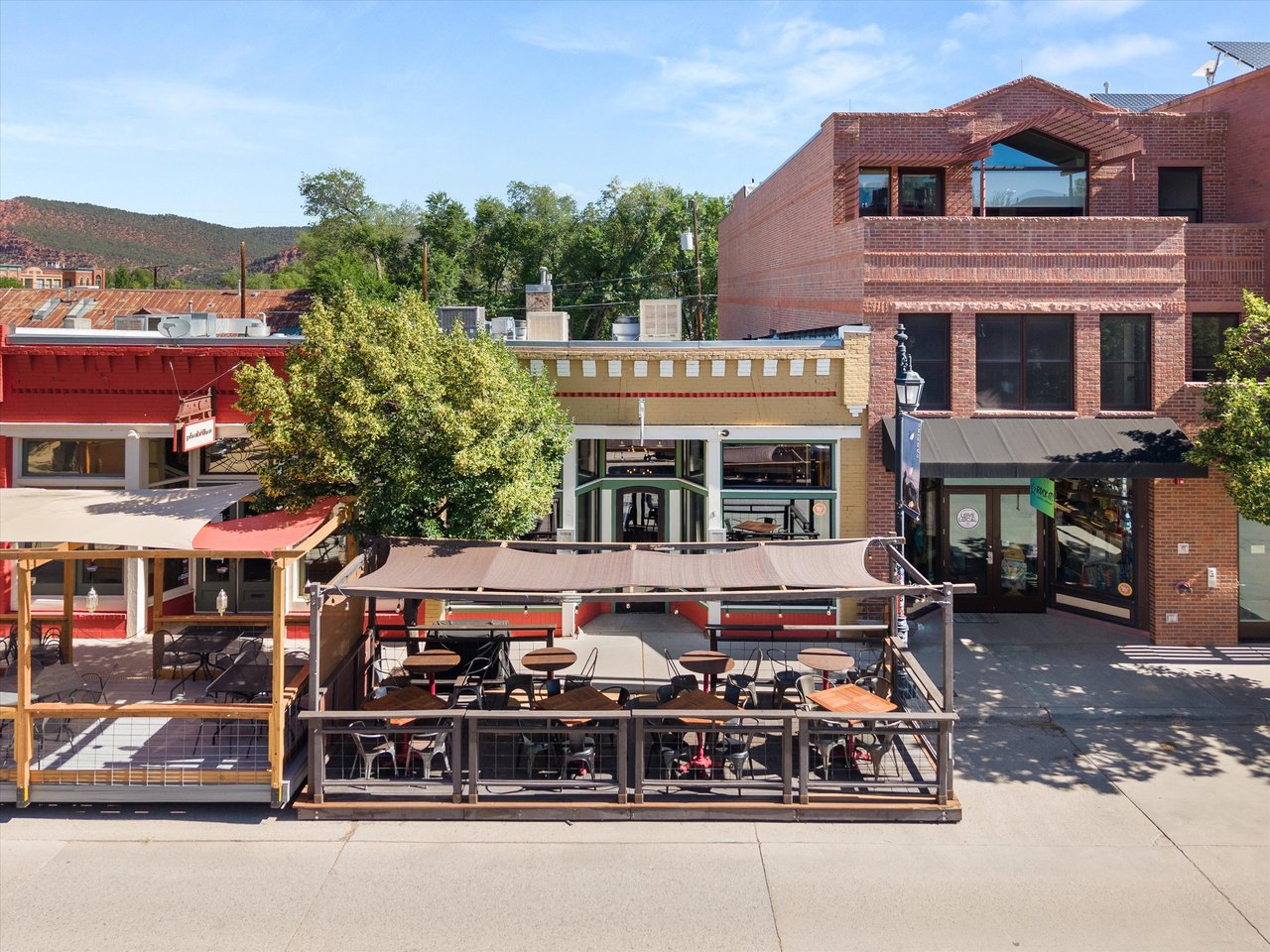
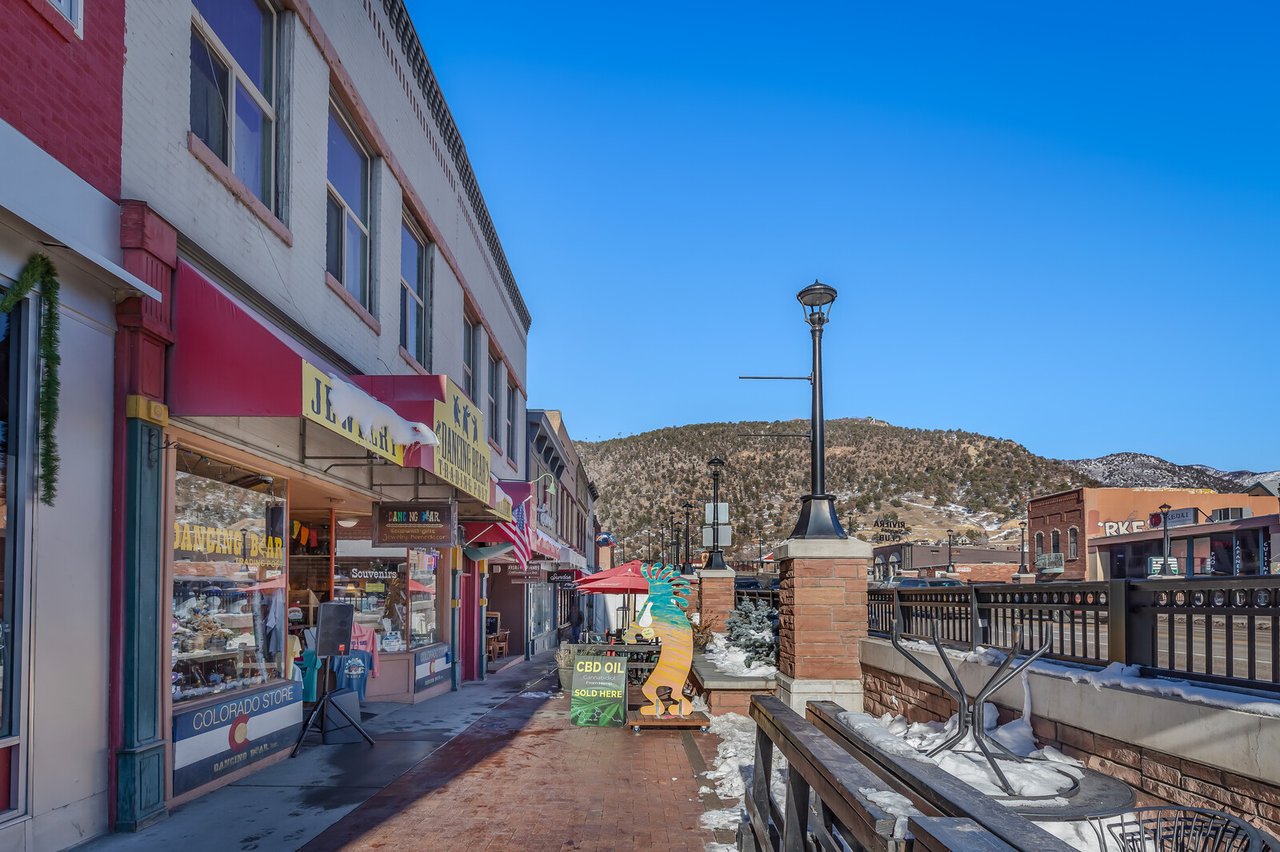
Downtown is Carbondale’s primary commercial center. The town’s planning documents support shopping, restaurants, entertainment, lodging, offices, employment-generating uses, and housing in this area, with a strong focus on mixed-use buildings and a pedestrian-oriented environment.
If your business benefits from foot traffic, window visibility, and spontaneous walk-ins, Downtown may be your best fit. Cafés, boutiques, and walk-in personal services often align well here because the area is designed to support active storefronts at the street edge.
There are tradeoffs, though. Parking and site layout can be tighter on Main Street, and some spaces may depend on shared or off-site parking arrangements. On part of Main Street, the code allows non-residential uses to provide parking on another parcel through a long-term lease, which can help, but it also means parking needs should be reviewed carefully before you commit.
Highway 133 frontage
If your concept depends more on drive-by visibility, easier vehicle access, or more convenient parking, Highway 133 frontage may make more sense. Carbondale’s Commercial-Transitional district was written for small parcels with Highway 133 frontage and includes corridor-specific rules for setbacks, landscape buffering, and roadway access.
For many service businesses or auto-oriented retail concepts, this corridor can be more practical than a downtown storefront. You may have better access for customers arriving by car, but the tradeoff is that site access and turning movements become more important during due diligence.
Downtown North and trail-adjacent mixed-use areas
Downtown North offers a different type of opportunity. The Comprehensive Plan describes this area as a transition zone north of the Rio Grande Trail, with guidance that supports mixed uses, active frontage to the trail, makerspace or live-work uses, and neighborhood-scale retail near the 4th Street and Rio Grande Trail intersection.
If your business is creative, hybrid, maker-oriented, or neighborhood-serving, this area may be worth a closer look. Spaces here may be a better fit if you want pedestrian and bicycle traffic, mixed-use flexibility, or a setting that is not purely dependent on highway exposure.
Step 3: Match the property to customer behavior
Once you know which corridor fits your concept, think about how your customers will actually use the space. This is where many first-time tenants or buyers make mistakes. A space can look great online and still function poorly for your business.
Focus on these site-fit questions:
- Can customers find you easily?
- Is parking realistic for your busiest times?
- Is the entrance visible from where people approach?
- Does the space support your daily flow, including deliveries, storage, and staffing?
- Will your storefront benefit more from pedestrians, cyclists, or passing vehicles?
Carbondale’s planning documents make clear that each corridor has different expectations for parking, access, building form, and customer flow. A good storefront decision is less about choosing the "best" address and more about choosing the address that fits how your business works.
Step 4: Confirm zoning and use early
Before you get too attached to a specific space, confirm that your use is allowed in that zone district. This step sounds basic, but it can save you time, money, and major frustration.
According to the Carbondale Unified Development Code, the answer may change from one block to the next. You should verify whether your proposed use is permitted, whether a review process applies, and whether design or historic standards could affect how you operate or build out the space.
A few items to check early include:
- Whether your proposed use is allowed in the district
- Whether site plan review is required
- Whether a conditional use permit or special use permit is needed
- Whether a sign permit will be required
- Whether façade, height, setback, or design standards apply
This is especially important in corridor-specific areas like the Historic Commercial Core or Highway 133 frontage, where requirements can materially shape what you can do.
Step 5: Review parking and access in real terms
Parking and access are often the deal-makers or deal-breakers for a first storefront. In Carbondale, this is not just a convenience issue. It is a code issue and a customer experience issue.
Downtown spaces may rely on shared lots or off-site solutions, while Highway 133 sites may involve more direct parking but also more scrutiny around access. The UDC notes that access points along Highway 133 should be coordinated with CDOT and based on projected traffic flows, so ingress, egress, and turning movement matter more than many first-time operators expect.
Do not stop at asking, “Is there parking?” Instead, ask:
- How many spaces count toward the use?
- Where are those spaces located?
- Are they shared with other users?
- Is there a long-term lease or other agreement supporting off-site parking?
- Will customers be able to enter and exit easily during peak traffic times?
Step 6: Think beyond rent or purchase price
A first storefront decision should go beyond the headline number. The cheapest option is not always the best value, and the most visible space is not always the right operational fit.
Look at the full picture, including location efficiency, likely customer draw, parking reality, signage opportunity, and any added costs tied to compliance or build-out. In Carbondale, where commercial areas are highly corridor-specific, a slightly more expensive space in the right setting may support your business far better than a cheaper one in the wrong corridor.
Step 7: Compare your top options side by side
When you narrow your search to two or three spaces, compare them using the same criteria. This helps you stay objective and avoid making a decision based only on aesthetics.
| Factor | Downtown/Main Street | Highway 133 Frontage | Downtown North/Mixed-Use |
|---|---|---|---|
| Best fit for | Walk-in retail, cafés, personal services | Service uses, vehicle-oriented access, strong visibility | Creative, hybrid, maker, trail-oriented concepts |
| Customer pattern | Pedestrian-heavy | Car-oriented | Pedestrian, bicycle, neighborhood traffic |
| Parking setup | Often tighter or shared | Often easier to provide on site | Varies by project and layout |
| Key strength | Foot traffic and street presence | Visibility and access | Flexibility and mixed-use potential |
| Key caution | Parking and lot constraints | Access coordination and traffic flow | Not ideal for every traditional retail model |
A side-by-side review can make the right choice much clearer, especially if you are balancing visibility, convenience, and future growth.
Step 8: Work with a local commercial guide
In Carbondale, local knowledge matters because zoning, parking, design standards, and corridor expectations can shift quickly from one area to another. A local commercial real estate team can help you evaluate not just what is available, but what is actually viable for your concept.
That includes interpreting submarket differences, reviewing parking and access realities, and helping you sort through lease or purchase terms before you get too far down the road. For a first storefront, that kind of guidance can help you avoid expensive missteps and move forward with a clearer strategy.
Choosing your first storefront in Carbondale is really about finding the right match between your concept and the town’s commercial layout. When you start with your business model, focus on corridor fit, and verify zoning, parking, and access early, you put yourself in a much stronger position to choose a space that supports long-term success. If you are ready to evaluate locations in Carbondale with a team that understands both small-business operations and commercial real estate strategy, connect with C&E Group.
FAQs
What is the best area in Carbondale for a first retail storefront?
- For many walk-in concepts, Main Street and Downtown are strong options because Carbondale’s planning documents prioritize pedestrian-oriented storefronts, shopping, dining, and mixed-use commercial activity there.
What should you verify before signing a storefront lease in Carbondale?
- You should confirm that your use is allowed in the zone district and check whether permits, site plan review, parking requirements, sign approvals, or design standards apply to the property.
Is Highway 133 a good fit for a Carbondale business location?
- Highway 133 can be a strong fit if your business depends on vehicle access, parking convenience, or road visibility, but you should review access and traffic flow carefully.
Are Downtown North spaces good for first-time business owners in Carbondale?
- They can be, especially for creative, hybrid, maker, or trail-oriented concepts, because the town’s planning guidance supports mixed-use development, active trail frontage, and flexible commercial formats in that area.
Why does corridor choice matter when choosing commercial space in Carbondale?
- Corridor choice matters because Carbondale’s planning and zoning rules vary by area, and those differences affect parking, access, building form, customer flow, and overall fit for your business.