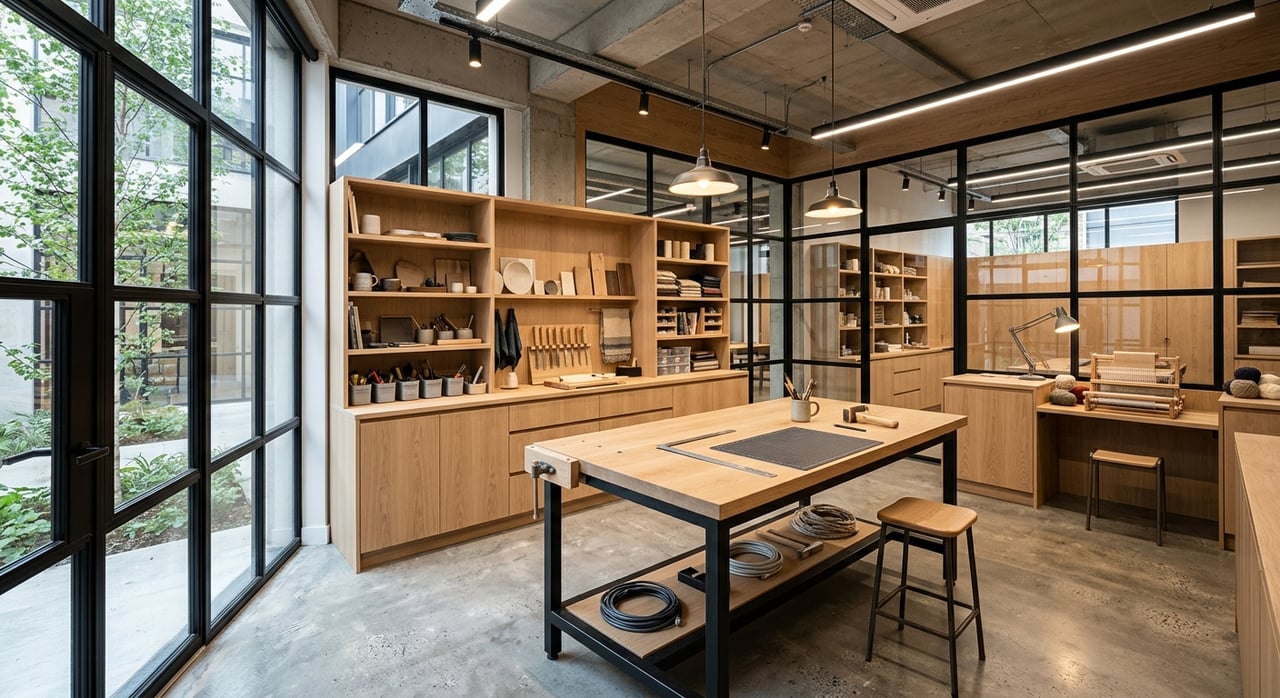
If you are a maker, artist, or creative business owner, the right space can shape everything from your daily workflow to how customers find you. In Carbondale, creativity is not tucked away on the sidelines. It is woven into downtown, public events, and the town’s broader business mix. If you are thinking about leasing, buying, or repositioning a space here, understanding how Carbondale supports creative work can help you make a smarter move. Let’s dive in.
Why Carbondale stands out for makers
Carbondale has built a real identity around creative work. The town was designated a Colorado Creative District in 2016, and Carbondale Arts describes the district as a place where arts, creative industries, history, ranching, local food production, and outdoor recreation overlap. It also notes that the district includes more than 200 creative organizations, artists, and artisans.
That matters if you are looking for more than four walls and a lease. In Carbondale, a creative space can plug into an existing ecosystem instead of starting from scratch. For makers, that can mean more visibility, more collaboration, and a stronger sense of momentum.
Downtown supports small-scale creative business
Main Street already functions as a compact creative commerce corridor. According to the Carbondale Chamber’s community profile and shopping guide, downtown includes restaurants, gifts, galleries, antiques, a cinema, boutiques, books, houseplants, outdoor shops, and other small-format retailers.
For a maker, that kind of setting can be a real advantage. You are not opening in isolation. You are joining a walkable area where people already browse, shop, and attend events, which can support studios, galleries, workshops, and maker-oriented storefronts.
Existing creative spaces show what works
One of the clearest local anchors is The Launchpad at 4th and Main. Carbondale Arts uses the space for its office, Artique Gift Shop, and gallery, and it also provides studio space for performing arts with two studio rooms. Just as important, the gallery and shop help increase visibility and economic opportunity for local artists.
S.A.W., or Studio for Arts + Works, offers another useful example. The property was remodeled from a former auto mechanic shop into artist studios and minimalist industrial-style offices. Its tenants include ceramicists, painters, printmakers, jewelers, sculptors, photographers, and service professionals, showing how adaptive reuse can support both production space and business use.
These examples matter because they show that creative real estate in Carbondale is flexible. A maker space here does not have to fit one narrow model. It can be a storefront, a studio, an office, a reused service building, or a hybrid of several uses.
Creativity extends beyond traditional studios
In Carbondale, creative work also reaches into public and everyday commercial spaces. The Rio Grande ARTway turns about a mile of trail behind downtown into an outdoor gallery with installations and project nodes like the Latino Folk Art Garden and DeRail Park. Carbondale Arts also curates art in local businesses, including Bonfire Coffee on Main Street.
That wider footprint is important if you are thinking about audience exposure. In some towns, makers rely only on destination traffic. In Carbondale, creative work shows up where people already gather, walk, and spend time, which helps support discovery in a more natural way.
What local makers say they need
Carbondale’s arts market study gives one of the clearest views into demand. Out of 342 survey respondents, 269 said they wanted at least one type of creative space in town. The strongest interest centered on affordable live/work community space, shared creative space or specialized equipment, and ongoing private studio or creative work space.
Focus-group participants also identified a wide range of priorities. Those included live/work housing, makerspace, teaching space, event space, temporary housing for artists-in-residence, coworking, gallery or exhibition space, retail for artists, wellness or community space, and a community kitchen.
For buyers, tenants, and property owners, this is useful market signal. It suggests that the need is not only for retail frontage. There is also demand for flexible layouts that support making, teaching, gathering, and small-scale selling in one place.
Property types that fit creative work
Carbondale’s Unified Development Code supports mixed-use and pedestrian-oriented development. The mixed-use district is designed to allow people to live, work, recreate, and shop close together, while also connecting downtown with the Rio Grande Trail. The Historic Commercial Core is intended for customer-oriented commercial uses at street level, with office and residential uses upstairs.
In practical terms, that creates room for several property types that may appeal to makers and creative entrepreneurs.
Downtown storefronts
Compact storefronts on or near Main Street can work well if your business depends on walk-in visibility, browsing, or regular event traffic. These spaces may be a fit for galleries, small retail concepts, working studios with a public-facing component, or businesses that combine crafted goods with customer interaction.
Upper-floor studios or apartments
The code framework also supports the idea that a creative business may not need all of its square footage on the ground floor. Upper-floor space can offer room for office use, studio work, or residential use above a customer-facing business below, depending on the property and use.
Adaptive-reuse buildings
S.A.W. is a local example of how a former service property can become a creative hub. For some makers, an adapted building offers the layout, durability, and industrial feel that production work needs, especially when the goal is less about traditional retail and more about functional work space.
Mixed-use projects
The local feasibility work recommended a downtown mixed-use affordable artist housing project with live/work housing on upper floors and classroom, collaborative, and commercial space on the ground floor. Even beyond that specific concept, the recommendation points to a broader local fit for projects that combine sales, making, teaching, and community use.
Recurring events can support visibility
Carbondale’s event calendar helps explain why small creative businesses can gain traction here. First Friday brings monthly downtown art openings, live music, and local flavors. The downtown farmers market runs every Wednesday on 4th and Main and features local farmers, producers, artisans, and crafted goods. Mountain Fair is a three-day summer event that draws thousands to the heart of town.
For makers, that kind of recurring foot traffic can be more useful than relying on occasional spikes. It creates repeated chances for local discovery, return visits, and word-of-mouth growth. If your concept benefits from being seen often, not just once, Carbondale offers a strong pattern of community activity.
How to think about space selection
If you are searching for a creative property in Carbondale, it helps to match the space to the way you actually work. A beautiful space is not enough on its own. The real question is whether the property supports production, sales, visibility, and day-to-day operations in the right balance.
Here are a few practical questions to ask:
- Do you need walk-in traffic, or is appointment-based access enough?
- Will most of your square footage support making, selling, teaching, or storage?
- Do you want a downtown storefront presence, or would an adaptive-reuse property fit better?
- Would a mixed-use layout help you combine business and residential goals?
- Does your concept benefit from proximity to events, trail traffic, or other small businesses?
The answers can point you toward very different property types, even within the same town. That is why local context matters so much in a market like Carbondale.
Why this matters for owners and investors
This conversation is not only relevant for tenants or buyers. It also matters for landlords and property owners thinking about how to position a space. Carbondale’s creative economy, event rhythm, and zoning patterns suggest there can be value in flexible layouts that support small-format commerce, studios, office use, and hybrid concepts.
When a property can serve how people actually work in Carbondale, it may be better aligned with local demand. That could mean thinking beyond a standard retail box and considering how a space might support production, teaching, collaboration, or upper-floor live/work potential, depending on the asset.
Carbondale offers room to create
Carbondale stands out because creativity here is not just a marketing theme. It shows up in the town’s districts, existing spaces, public art, recurring events, and planning framework. For makers, that creates real possibilities across storefronts, studios, mixed-use properties, and adaptive-reuse buildings.
If you are exploring your next move, the goal is not simply to find available square footage. It is to find a space that supports the way you create, connect, and grow in Carbondale’s local ecosystem. To talk through opportunities in the Roaring Fork Valley, connect with C&E Group.
FAQs
What makes Carbondale a good place for makers?
- Carbondale is a Colorado Creative District with a downtown business mix, public art presence, and recurring events that support visibility for artists, artisans, and creative entrepreneurs.
What kinds of spaces support creative work in Carbondale?
- Local examples and planning guidance point to compact downtown storefronts, upper-floor studios or apartments, adaptive-reuse buildings, and mixed-use spaces that combine making, selling, teaching, and gathering.
What does Carbondale’s market research say makers want?
- The town’s arts market study found strong interest in affordable live/work space, shared creative space, specialized equipment, private studios, teaching space, event space, coworking, and artist retail opportunities.
How do local events help creative businesses in Carbondale?
- Events like First Friday, the Wednesday downtown farmers market, and Mountain Fair create recurring public traffic that can help makers gain exposure and build repeat local awareness.
What should you look for in a creative space in Carbondale?
- Focus on how the space supports your real workflow, including visibility, production needs, layout flexibility, customer access, and whether a downtown, mixed-use, or adaptive-reuse setting best fits your business model.